Sunday, January 4, 2015

Luis Chaluisan La Familia


Mi Historia Como Chaluisan


ENTREVISTA CON  
En Ingles
 BGSU Department of Romance and Classical Studies 
Masters Program Interview Ryan Keifer - Luis Chaluisan
El proceso de montaje de la nueva producción y el trabajo para la revista salsamagazine.com me ha ayudado no sólo en el establecimiento de nuestras raíces puertorriqueñas como una familia, la experiencia nuyoricana y nuestra presencia en la cultura Americana, pero ha llevado a mi descubrimiento de una cinta de audio hecha en 1981 entrevistando a mi abuelo Luis en el momento del nacimiento de nuestra hija de Chasan. Mi abuelo fue el archivista de la familia y antes de su debilidad por él Alzheimer poseído una mente aguda para los hechos. Él fue capaz de hablar sobre la familia Chalusan en la cinta de 45 minutos en una forma muy agradable y oír su voz otra vez me ha inspirado a seguir trabajando en lo que se está convirtiendo en un elemento importante en mi deseo de completar un doctorado.  Luis Federico Chaluisan Morales Y Batlle


Antecedentes previos a la familia Chaluisant 
emigrar al Caribe desde el sur de Francia. 

En 1528, los franceses, que reconoce el valor estratégico de Puerto Rico, saquearon y quemaron la ciudad suroccidental de San Germán. También destruyeron muchos de los primeros asentamientos de la isla, incluyendo Guánica, Sotomayor, Daguao y Loíza antes de la milicia local les obligó a retirarse. El arreglo único que quedaba era la capital, San Juan. Corsarios franceses otra vez despediría a San Germán en 1538 y 1554. En 1797, los franceses y los españoles declararon la guerra al Reino Unido. Los británicos intentaron volver a conquistar la isla, atacando a San Juan con una fuerza de invasión de 7.000 soldados y un ejército compuesto por 64 buques de guerra  bajo el mando del general Ralph Abercromby. Capitán General Don Ramón de Castro y su ejército resistió con éxito el ataque. Al darse cuenta de que estaba en peligro de perder sus dos restantes territorios del Caribe, la Corona española revivió la Real Cédula de Gracias de 1815. El decreto fue publicado en español, Inglés y francés con el fin de atraer a los europeos, con la esperanza de que los movimientos de independencia perderían su popularidad y fuerza con la llegada de nuevos colonos. Tierra libre se ofrece a aquellos que querían poblar las islas con la condición de que juran su lealtad a la Corona española y la lealtad a la Iglesia Católica Romana. El 10 de agosto de 1815, la Real Cédula de Gracia fue emitida, lo que permite a los extranjeros a entrar a Puerto Rico (incluidos los refugiados franceses de La Española), y la apertura del puerto al comercio con países fuera de España. Este fue el comienzo de la agricultura basada en el crecimiento económico, con el azúcar, el tabaco y el café son los productos principales. El decreto también dio la tierra libre para cualquier persona que juraron su lealtad a la Corona española y su lealtad a la Iglesia Católica Romana. Miles de familias de todas las regiones de España (sobre todo Asturias, Cataluña, Mallorca y Galicia), Alemania, Córcega, Irlanda, Francia, Portugal, las Islas Canarias y otros lugares, que escapan de duros tiempos económicos en Europa y atraídos por la oferta de libre tierra, pronto emigró a Puerto Rico. Sin embargo, estos pequeños avances en la autonomía y los derechos fueron de corta duración. Tras la caída de Napoleón, el poder absoluto regresó a España, que revocó la Constitución de Cádiz y Puerto Rico reintegrados a su antigua condición de colonia, sin perjuicio de la facultad irrestricta del monarca español. 


Apellido Chaluisan (Chaluisant)

Según mi abuelo Don Luis Chaluisan, dos hermanos franceses esclavista / propietarios de las plantaciones (Daniel y Emile Chaluisant ) se asentaron en Haití a finales del siglo 16 (1789) antes de la Revolución Haitiana. La revolución haitiana (1791-1804) fue una revuelta de esclavos en la colonia francesa de Saint-Domingue, que culminó con la eliminación de la esclavitud allí y la fundación de la república de Haití. Los hermanos y sus esposas huyeron a Puerto Rico y se trasladaron a la zona ahora conocida como Las Marías. Los dos hermanos continuaron esclavos al igual que sus descendientes hasta 1873. Los líderes del movimiento abolicionista puertorriqueño, entre ellos José Julián Acosta, Francisco Mariano Quiñones, Julio L. de Vizcarrondo, Ramón Emeterio Betances y Segundo Ruiz Belvis, libró una larga lucha para terminar con la esclavitud en la isla. El 22 de marzo de 1873, la Asamblea Nacional de españoles finalmente abolió la esclavitud en Puerto Rico. Los propietarios fueron indemnizados con 35 millones de pesetas por esclavos y los esclavos estaban obligados a continuar trabajando por tres años más. 
Ambos hermanos engendrado hijos que más tarde se entremezclan con sus propios esclavos mientras perdiendo poco a poco sus conocimientos del idioma francés y la adopción de español como su idioma principal. Don Luis me dijo de su abuelo abuelo paterno Chaluisant y tíos abuelos fueron ridiculizados por no ser capaz de dominar los dos idiomas. Después de 1873, los niños afro caribeños bastardos de la familia Chaluisant adoptó el apellido. Todavía persiste el racismo en nuestra familia. Conocí a uno de los de piel más clara de San Juan cuando vivía en Puerto Rico, quien me dijo que hay dos tipos de Chaluisan - elegidos (señalando a su Palmar) y sin lavar el que apunta a la parte superior de su mano (dorsal.) Teniendo en cuenta que estaba rodeado de primos oscuros de piel en el barrio (Mariana Bracetti, Mayagüez) rápidamente me desvincularse de él. Hay dos nombres de sitios nombrado por la familia Chaluisant. Un pequeño parque en el sur de Francia y en una calle lateral en Mayaguez Puerto Rico. Una traducción del nombre Chaluisant es "El de la sangre fuerte". La familia Chaluisant se trasladó a Mayagüez a la vuelta del siglo 20 y luego a Nueva York a finales de los años '40.


La Vida En Sociedad Esclavista En Las Marias
De "Yauco a Las Marías" Karl Stephen Herrman 

"A pesar de la creencia común de lo contrario, el color de línea se dibuja como rígidamente en Puerto Rico como en el Kentucky. Las personas que no tienen nada más que sangre castellana en sus venas son tan orgullosos como Virtud. Y, mientras que la política y los negocios ver una cierta mezcla de colores de piel, la mezcla deja de existir en el umbral de la casa. No español permitiría a sí mismo para cantar a su "negro como el carbón dama" o su "chica linda amarilla"; y si lo hizo, estaría condenado al ostracismo. Las mujeres son todas muy bonitas o feas extremadamente y sencillamente nunca. Las chicas de la mejor clase son criados desde la infancia bajo una vigilancia constante que no conoce la laxitud hasta después del matrimonio, y no del todo cesar hasta entonces. Se le enseña a tocar el piano o la guitarra, a bordar, a cantar un poco, para bailar un poco menos, a hablar y leer en francés, para empolvarse la cara, y caminar como una reina. Ella suele ser casada  antes de cumplir los diecisiete años, sobre todo si su padre tiene dinero. Y hasta el día de la muerte, nunca ve a un periódico moderno, nunca va barrios bajos, y nunca utiliza sus manos suaves con el trabajo. De cualquier grado es apta para amar su marido con devoción y no cree que su carrera redondeado hasta que ella es una madre. "
ENGLISH TEXT
  
The process of assembling the new production and work for salsa magazine has helped me in not only establishing our Puerto Rican Roots as a family, the Nuyorican experience and our presence in American Pop Culture but has led to my discovery of an audio tape made in 1981 interviewing my Grandfather Luis at the time of our daughter Chasan's birth. My grandfather was the family archivist and prior to his debilitation by Alzheimers he possesed a keen mind for facts. He was able to break down the Chalusan family legacy on the 45 minute cassette tape in a very delightful way and hearing his voice again has inspired me to continue working on what is becoming an important element in my desire to complete a doctorate.

Background leading up to the Chaluisant family immgrating to the Caribbean from southern France. In 1528, the French, recognizing the strategic value of Puerto Rico, sacked and burned the southwestern town of San Germán. They also destroyed many of the island's first settlements, including Guánica, Sotomayor, Daguao and Loíza before the local militia forced them to retreat. The only settlement that remained was the capital, San Juan. French corsairs would again sack San Germán in 1538 and 1554. In 1797, the French and Spanish declared war on the United Kingdom. The British attempted again to conquer the island, attacking San Juan with an invasion force of 7,000 troops and an armada consisting of 64 warships under the command of General Ralph Abercromby. Captain General Don Ramón de Castro and his army successfully resisted the attack. Realizing that it was in danger of losing its two remaining Caribbean territories, the Spanish Crown revived the Royal Decree of Graces of 1815. The decree was printed in Spanish, English and French in order to attract Europeans, with the hope that local independence movements would lose their popularity and strength with the arrival of new settlers. Free land was offered to those who wanted to populate the islands on the condition that they swear their loyalty to the Spanish Crown and allegiance to the Roman Catholic Church. On August 10, 1815, the Royal Decree of Grace was issued, allowing foreigners to enter Puerto Rico (including French refugees from Hispaniola), and opening the port to trade with nations other than Spain. This was the beginning of agriculture-based economic growth, with sugar, tobacco and coffee being the main products. The Decree also gave free land to anyone who swore their loyalty to the Spanish Crown and their allegiance to the Roman Catholic Church. Thousands of families from all regions of Spain (particularly Asturias, Catalonia, Majorca and Galicia), Germany, Corsica, Ireland, France, Portugal, the Canary Islands and other locations, escaping from harsh economic times in Europe and lured by the offer of free land, soon immigrated to Puerto Rico. However, these small gains in autonomy and rights were short lived. After the fall of Napoleon, absolute power returned to Spain, which revoked the Cádiz Constitution and reinstated Puerto Rico to its former condition as a colony, subject to the unrestricted power of the Spanish monarch. 

                                       Chaluisan surname:
        Originally "Chaluisant"              

According to my grandfather Don Luis Chaluisan, two slave owning French Brothers and  Plantation owners (Daniel and Emile Chaluisant) first settled in Haiti at the end of the 16th century (1789) prior to the Haitian Revolution. The Haitian Revolution (1791–1804) was a slave revolt in the French colony of Saint-Domingue, which culminated in the elimination of slavery there and the founding of the Haitian republic. The brothers and their wives fled to Puerto Rico setlling in the area now known as Las Marias. Both brothers continued to own slaves as did their progeny until 1873. Leaders of the Puerto Rican abolitionist movement, including José Julián Acosta, Francisco Mariano Quiñones, Julio L. de Vizcarrondo, Ramón Emeterio Betances and Segundo Ruiz Belvis, waged a long struggle to end slavery on the island. On March 22, 1873, the Spanish National Assembly finally abolished slavery in Puerto Rico. The owners were compensated with 35 million pesetas per slave, and slaves were required to continue working for three more years. Both brothers sired children who later intermixed with their own slaves while slowly losing their French language skills and adopting Spanish and their prime language. My grandfathers memory of his paternal Chaluisant grandparent and great uncles is that they were ridiculed for not being able to master both languages. After 1873, the Afro Caribbean bastard children of the Chaluisant family adopted the surname. There still lingers racism in our family. I met one of the lighter skinned Chaluisan's from San Juan when I lived in Puerto Rico who told me that there are two types of Chaluisan - the chosen (pointing to his Palm-Palmar side) and the unwashed (pointing to the top part of his hand-Dorsal side.) Given I was surrounded by dark skinned Chaluisan cousins in the neighborhood (Mariana Bracetti, Mayagüez) I quickly disasociated myself from him. There are two sites names after the Chaluisant family. A small park in Southern France and a Side Street in Mayaguez Puerto Rico. One translation for the name is "He of the strong blood". 
The Chaluisant family moved to Mayaguez en masse at the turn of the 20th century. 
 

From "Yauco to Las Marias" by Karl Stephen Herrman
Life in Slaveholding Puerto Rican Society
"Despite a common belief to the contrary, the color-line is drawn as rigidly in Puerto Rico as it is in Kentucky. The people having nothing but Castilian blood in their veins are as proud as Virtue; and, while politics and business see a certain mingling of skin-colors, the mixture ceases to exist across the threshold of home. No true Spaniard would permit himself to sing of his "coal-black lady" or his "cute little yallar gal"; and, if he did, he would be ostracized. The women are all very pretty or extremely ugly, and never simply plain. The girls of the better class are brought up from babyhood under a constant surveillance that knows no laxity until after marriage, and does not altogether cease even then. The growing bud is taught to play the piano or guitar, to embroider, to sing a little, to dance a little less, to speak and read French, to powder her face with art, and to walk like a very queen. She is usually married before she is seventeen, especially if her father has money; and, until the day of hr death, she never sees a modern newspaper, never goes slumming, and never soils her gentle hands with work of any degree. She is apt to love her husband devotedly, and does not think her career fitly rounded until she is a mother."

ABOUT LAS MARIAS: 
 
Las Marías is incorporated as a municipality in 1871 by Benito Recio. Prior to that it is considered part of the outskirts of Mayaguez. The distance from Las Marias to Mayagüez is 6 miles (10 kilometers) in a straight line. Walking from Las Marias to Mayagüez takes 2.13 hours (128 minutes) at a rate of 3 miles per hour in a straight line. Las Marías (Spanish pronunciation: [laz maˈɾi.as]) is a municipality of Puerto Rico located north of Maricao; southeast of Añasco; south of San Sebastián; east of Mayagüez; and west of Lares. Las Marías is spread over 13 wards and Las Marías Pueblo (The downtown area and the administrative center of the city). Las Marías, Puerto Rico The flag is divided by an imaginary diagonal line whose ends are the superior left angle of the flag and the opposite inferior angle. The superior part is yellow and the inferior one green. The yellow portion represents the sun bathing the town and the green portion represents the nature and vegetation of the town. Coat of Arms: The shield is divided into six parts with three in silver and three in blue. A "María" tree (Callophylum brasiliense antillum), with a pair of coffee tree branches to the sides of its trunk, adorns each silver part. The monogram and crown of Nuestra Señora la Santísima Virgen de Plata is placed in the top center portion of the shield. The shield's border is red with a broken chain at the bottom. Above the shield resides three tower crown in gold.

Festivals and events:
Orange Festival - March
Foundation of the Town - March
Paso Fino Festival - June
Matron Festivities - December
Dia De Los Reyes - January 
         Our mother's geneology-Lamboy Sanabria Medina-Batlle
Batlle surname (Catalan pronunciation: [ˈbaʎːə, ˈbaʎːe]), alternatively spelled Batle (pronounced: [ˈbalːe, ˈbaɫːə]), is a surname of Catalan origin found in Catalan-speaking territories and countries that received immigrants from Catalonia, Valencia and the Balearic Islands. "Batlle" signified a servant to the court taking care of municipal duties such as tax collection and administrative duties. According to our family history, the Batlle's settled in Mayaguez and established coffee plantations in the late 18th century. My grandfather Juan Batlle moved to Mulberry Street in Little Italy in early 1949


SIDEBAR
Ramón Emeterio Betances 

French Connection

1. Betances was born in Cabo Rojo, Puerto Rico, in the building that now houses the "Logia Cuna de Betances" ("Betances' Cradle Masonic Lodge"). Betances' parents were Felipe Betanzos Ponce, a merchant born in Hispaniola (in the part that would later become the Dominican Republic; the surname Betanzos transformed into Betances while the family resided there), and María del Carmen Alacán de Montalvo, a native of Cabo Rojo and of French ancestry. They were married in 1812.
Betances claimed in his lifetime that a relative of his, Pedro Betances, had revolted against the Spanish government of Hispaniola in 1808 and was tortured, executed, and his body burned and shown to the populace to dissuade them from further attempts. Meanwhile, Alacán's father, a sailor, led a party of volunteers that tried to apprehend Roberto Cofresí in 1824 and did arrest some of Cofresí's crew, for which he was honored by the Spanish government.
At the time of his arrival in Paris, Betances witnessed the aftermath of the 1848 Revolution and its backlash, the June Days Uprising, earlier that year. His future political views were directly shaped by what he saw and experienced at the time. He considered himself "an old soldier of the French Republic". Inspired by the proclamation of the 2e République, he rejected Puerto Rican aspirations for autonomy (sought from Spain by Puerto Rican politicians since 1810) in favor of Puerto Rican independence.
2. María del Carmen, nicknamed Lita, was born in 1838. She had met Betances when she was 10, and Betances became instantly fond of her. Once he returned to Puerto Rico from his medical studies he requested the necessary ecclesiastical permissions to marry her (due to the degree of consanguinity between them), which were granted in Rome (then part of the Papal States) after an extended delay. Their marriage was supposed to occur on May 5, 1859 in Paris, but Lita fell sick with typhus and died at the Mennecy house of Dr. Pierre Lamire, a friend from Betances' medical school days, on April 22, 1859 (the Good Friday of that year).
Betances was psychologically devastated by Lita's death. Accompanied by his sister, brother-in-law, local friends and a few Puerto Rican friends residing in Paris at the time (which included Basora, Francisco Oller and another Cabo Rojo native, future political leader Salvador Carbonell), Betances had Lita buried on April 25. Her body was later reburied in Mayagüez, on November 13 of that year. Salvador Brau, a historian and close friend, later wrote that once Betances returned to Puerto Rico with Lita's body, he suspended all personal activities besides his medical work, spent a considerable amount of time caring for her tomb at the Mayagüez cemetery, and assumed the physical aspect that most people identify Betances with: dark suit, long unkempt beard, and "Quaker" hat.
Betances immersed himself in work, but later found time to write a short story in French, La Vièrge de Boriquén (The Boriquén Virgin), inspired in his love for Lita and her later death, and somewhat influenced by Edgar Allan Poe's writing style. Cayetano Coll y Toste later described the story of Lita and Betances in the story La Novia de Betances, from his book "Leyendas y Tradiciones Puertorriqueñas" (Puerto Rican Legends and Traditions).
3. Betances was responsible for numerous proclamations that attempted to arouse Puerto Rican nationalistic sentiment, written between 1861 and his death. The most famous of these is "Los Diez Mandamientos de los hombres libres" (The Ten Commandments of Free Men), written in exile in Saint Thomas in November 1867. It is directly based on the Declaration of the Rights of Man and of the Citizen, adopted by France's National Assembly in 1789, which contained the principles that inspired the French Revolution.Gregorio Luperón met Betances in Saint Thomas, and offered to assist the Puerto Rican revolution, in exchange for help to overthrow Báez once the right circumstances were met. As a consequence, Betances organized revolutionary cells in Puerto Rico from exile, which would be led by leaders such as Manuel Rojas and Mathias Brugman. Betances instructed Mariana Bracetti to knit a flag for the revolution using the colors and basic design similar to that of the Dominican Republic (which in turn was almost identical to a French military standard). Betances was also supposed to send reinforcements to the Puerto Rican rebels through the use of a ship purchased by Puerto Rican and Dominican revolutionaries, "El Telégrafo" (which was to be shared by both), but the ship was confiscated soon after arrival by the government of the then Danish (later United States) Virgin Islands.
According to Puerto Ricans and French historians in three different fields (medicine, literature and politics), Betances left a legacy that has been considerably understated, and is only being assessed properly in recent times.
4. A marble plaque commemorating Betances was unveiled at his Paris house by a delegation of Puerto Rican, Cuban and French historians on the 100th. anniversary of his death, on September 16, 1998. Paul Estrade, Betances' French biographer, likens him to Simón Bolívar, Antonio José de Sucre, Bernardo O'Higgins and José de San Martín.
Estrade assesses his legacy as an Antillean this way: "The Antilles have developed political, social and scientific ideas that have changed the world, and that Europe has used. Not everything has (a  European) source. Betances is the maximum expression of this reality."
Betances was also one of the first Puerto Rican "writers-in-exile". In 1851, a small group of Puerto Rican university students in Europe formed the "Sociedad Recolectora de Documentos Históricos de la Isla de San Juan Bautista de Puerto Rico", a society that attempted to research and catalog historical documents about Puerto Rico from firsthand government sources. Betances became the Society's researcher in France. The result of the Society's research was published in an 1854 book, for which Betances contributed. Inspired by Alejandro Tapia y Rivera, the Society's organizer, who had written a novel inspired in Puerto Rican indigenous themes while studying in Madrid, Betances writes his novel: "Les Deux Indiens: Épisode de la conquéte de Borinquen" (The Two Indians: an episode of the conquest of Borinquen), and publishes it in Toulouse in 1853, with a second edition published in 1857 under the pseudonym "Louis Raymond". This novel would be the first of many literary works by Betances (most of which were written in French), and is notable for its indirect praise of Puerto Rican nationhood which, he suggests, was already developed in pre-Columbian Puerto Rico. This type of "indigenist literature" would become commonplace in Latin America in later years. He also wrote poetry in both French and Spanish for literary magazines in Paris, chiefly inspired by Alphonse de Lamartine and Victor Hugo.
 Luis Federico Chaluisan Morales Y Batlle

Wednesday, December 24, 2014

Luis Chaluisan Biography


Baptized in Brooklyn
Raised in The Bronx
Artist in Manhattan
 The Creative Journey Of 
One Boogie Down Rican
Through The American Landscape 
1957-Present 
10467

 We exchange whispers
That echo brilliant dreams

And Big Stuff
Captured in the white lights
Beaming
From the Manhattan skyline
That sways in the night
Just outside her window
And ride the original Internet 
To destinations far and wide 
When not losing ourselves in celluloid dreams
Or Our Parents Dancing The Night Away
While The Sound of
 Daniel Santos Singing 
And Smell of Fried Arenca
Wafting In The Air 
Fill Saturday Mornings.
Today reassembled in digital 1's and 0's.
Luis Chaluisan is 
AUTHOR OF
Spic Chic [Paperback] 
"An Original, Uprorarious, Disarming Journey 
That Holds No Limits And Where Nothing Is Sacred."
Nicholosa Mohr Author

"His Unique Voice As A Writer Clearly Displays 
His Poetic Influences, His Uncanny Ear For 
Dialogue And His Completely Original Sense Of Humor."
Elias Stimac Backstage

"Strong Stuff, Right In The Nuyorican Tradition. 
Poems And Then Stories Back Into Poems That 
Are Often Emotionally Moving. A Self Exploration 
In A Non-Chronological History Consistent In 
Language And Point Of View, It Is Clearly A Highly 
Personalized Work That Is Successful In The Nuyorican 
Free-Style Genre And Successful In The Broader Sense As Well."
David Henderson ('Scuse Me While I Kiss The Sky: Jimi Hendrix Voodoo Child)

Clem Richardson Of The NY Daily News 

Describes Chaluisan's Work As 
"Old-School, Often As Literate As It Is Lyrical, 
Stuffed With Images Drawn From NY City Life."
SPIC CHIC PDF Google Docs


Spic Chic, By Luis Chaluisan
(Fly By Night Press, 2009)
Review By Charlie Vázquez
AMBIENTE MAGAZINE
The Rules Of Poetry Are Created By Its Author, Much As A Criminal Operates Both Within And Away From Society, As He Or She Sees Fit. Thus, It’s No Wonder That So Many Poets Past And Present Have Dabbled In Crime And Write About These Adventures Of Subculture, As With Luis Chaluisan, Who Surfaced In The Earliest Days Of The Nuyorican Poetry Scene. Chaluisan’s Poems Are Odes—Both Celebratory And Regretful—To His Experiences As A New York-Born Puerto Rican Surviving On The Streets Of New York. And I’m Not Talking About The Well-Heeled New York Of Today, But Of The Smoldering 1970s And 1980s. I Remember Living In The East Tremont Neighborhood Of The Bronx During The Mid- To Late-1970s, And Anyone Involved In Crime Who Survived To Write About It Gets Instant Applause For That Alone.
Luis “El Extreme” Chaluisan—A Musician, Writer, And Former News Reporter—Is In No Denial Of His Controversy, As Spelled Out In The Book’s Opening Disclaimer Statement. Although I Thought I Knew What I Was Walking Into When I Read This Book By The Section 13 Jetty Of The “Bronx Riviera” Recently (Orchard Beach), I Was Thrown For Some Surprises. These Twenty-Plus Pieces Range From Serious (“Johnny Boy”) To Whimsical (“Surfing In The South Bronx”), And Chaluisan’s Greatest Effectiveness Is Achieved When He Releases His Honest Emotions For Public Viewing— Which You Almost Don’t Expect Him To Do (“I Slide Precariously Alongside Her Path, At Once Tender, Then Off-Center,” From “Carmen Baby”). In “Wilfredo The Anointed Apostle”, About A Gay Santero Barber, Chaluisan Explains, “So Before We Crucify Him With Whispered Nails…Homo, Queer, Fazzy Hole…Stop And Think…Perhaps A Person’s Lifestyle Is Really A Blessing, For Who Are We To Know God’s Ways And Plans…When We’re Walking Together, People Just Stop And Stare…But If You Could See Him Through My Eyes, He Wouldn’t Be A Faggot But A Man.” Spic Chic Is An Exciting Tour Of Jazz And Salsa Clubs, Women Of Pleasure, Of The Island, Of Desperate People Struggling To Survive—Of Joy And Pain—But It’s Also About Transformation. It’s Really About Becoming Greater And Wiser Than What Doom Had Planned For Your Soul.

REPEATING ISLANDS REVIEW

Spic Chic: The Adventures Of The Last Nuyorican (2009) Is A Book Of Poetry By Musician, Writer, And Former News Reporter/Producer Luis Chaluisan. Clem Richardson Of The NY Daily News Describes Chaluisan’s Work As “Old- School, Often As Literate As It Is Lyrical, Stuffed With Images Drawn From New York City Life.” David Henderson Sees This Text As “Strong Stuff, Right In The Nuyorican Tradition. Poems And Then Stories Back Into Poems That Are Often Emotionally Moving. A Self Exploration In A Non-Chronological History Consistent In Language And Point Of View, It Is Clearly A Highly Personalized Work That Is Successful In The Nuyorican Free-Style Genre And Successful In The Broader Sense As Well.”

Luis Chaluisan (Author), Knight Q (Illustrator), El Extreme (Illustrator)Be the first to review this item  Available from these sellers. (AMAZON) 2 used 

 
 Sometimes in order to move forward 
you must go back on the path. 
Born 
Elmhurst Hospital
 79-01 Broadway
Elmhurst, Queens NY
Sept. 27, 1957 
3:29 PM  
Baptized Oct. 1957
St. Paul's Catholic Church
Boerum Hill, BK.
 234 Congress St, Brooklyn, NY
 First Grade 1963
Boerum Hill, BK. 
St Paul's Catholic School
Holy Family Hospital 
Founded in 1868
155 Dean St., Brooklyn, 
Replaced by Brooklyn 
Diocese nursing home. 
My Father Buys Me My First LP
Please Please Me 
The Beatles
March 1963

Favorite Cuts
1. Side A 

"I Saw Her Standing There"
1. Side B "Love Me Do"
7. Side B  "Twist and Shout" 

(Phil Medley, Bert Russell)

Luis and Ronald Chaluisan 1963 
Boerum Hill, BK. 
142 Dean Street Brooklyn NYC 
Tony The Pony by Marx  1963
 Battery operated toy pony our parents
buy for my brother Ron
that could go either or backward 
by the use of a foot pedal 
and controlled by the reins. 
Boerum Hill, BK. 
Live around the block.
Their mother Cristina
is my sitter.
139 Hoyt Street, BK.
Richie Ray Home 
Richie Ray-Ray Maldonado
1952
139 Hoyt Street 
Ricardo Ray Arrives/Comejen
FONSECA RECORDS 1964
Every Store in Boerum Hill, BK.
had this album proudly 
displayed in their windows. 
On The Scene With Ricardo Ray  
Fonseca Records 1965
And He Followed 
Up With LP's 
In Rapid  Succession
Bringing The Mod Beat 
To Latin Music
Vis A Vis SALSA!

Richie Ray's 
Music Becomes The 
Soundtrack To Our 
Chaluisan Experience
In Brooklyn and The Bronx
Richie Ray 3 Dimensions  
Fonseca Records 1966

Family Moves To The Bronx
November 1964
My Grandfather Luis 
Lives Nearby
3316 Lurting Avenue
Bronx 10469 
The Spanish American Barber Shop 
Harlem USA 116th Street Stop 
on 2/3 Trains. Towards 117th Street 
on downtown side of train entrances corner 
116th Street. My Grandfather Luis Cut Hair 
There Since The 1950's

2nd Through 8th Grade
Baychester 10469
1964-1971
My Grandfather Takes Me To The
1964 New York World's Fair
And Buys Me 
A Transistor Radio
Which I Listen To
Late In The Night
In My Secret 
World Of Music
WMCA AM NYC 
Love Good Guys 
Radio By Day


Get Hip With
 Frankie Crocker in the evening.
Follow Him To WBLS FM 107.9
And His Deep Soul Funk Music
When He Switches Stations. (1970)
And what is the color of the day today?
 
Begin To Learn About 
Roots-Culture and Salsa
By Listening To 
WKCR FM 1973
While at Columbia College Jose "Cheo" Diaz, Carlos DeLeon 
and Carlos DeJesus were the first in the New York City Tri-State 
Area and at Columbia University to produce, program and announce 
Salsa/Latin Jazz/and Spanish Folkloric Music over the airwaves of 
WKCR 89.9FM (1970) 

Saint Philip  & James 
Altar and Virgin
Where I have my 
first religious vision
Christmas 1969 
Concentrating 
on Mary's Statue
Write first serious poem
about the experience in 8th Grade
1970
What was built on 205 acres, shaped like 
a large map of the United States 
and bore more than a passing 
resemblance to Disneyland? 
 FREEDOMLAND! In The NBX
It’s Freedom Land
And
Section 5 at
The Bronx Riviera
(Orchard Beach)
Salsa
Is oratories
That exorcise
Suffering
There are only
Fleeting bad moments
In life
Everything changes
And our sorrows
Are prayed away
In verse and song
It’s a bronze
Statue of Liberty
Holding sheet music
And
A set of maracas
While Ricans stay in clave
And see the world
Awash in Renaissance perspective
Aware of the past in the present  


First HO Electric Racing Set 1967
First Bike 1968 


Battle Family Dinner 1968
Chaluisan Family Dinner 1970

 
Christmas In The Bronx 1970
A Kid's Life Building
Backyard Wooden Forts 
Racing HO Electric Cars
Riding our Schwinn Bikes 
Family Dinners
Building Go Carts 
1964-1970
BRONXWORLD  
Alpha Recordings 1990
My ode to theBronx, 
The Beatles, Phil Spector 
and AM 60's radio
Gun Hill Road
I ride the Number 2 Train a lot
I glide in the front car
looking at myself in the windows
Hide In the middle cars
next to the conductors
And when I feel daring
I go down to the
Third World Club Car
At the end of the train
Catching a contact buzz
From all the cheeba smoke
I love the drama 

The Journey As 
A Producer And Artist

 My father and mother give me a 
Kodak 100 Instamatic 1966
Sparking my curiosity about images
My grandfather gives me a 
reel to reel recorder and 
television set I use to create 
audiotape programs for my 
amusement in 1967
My parents give me a second 
smaller reel to reel recorder I 
use to record conversations 
with my brother and silly stuff
1968
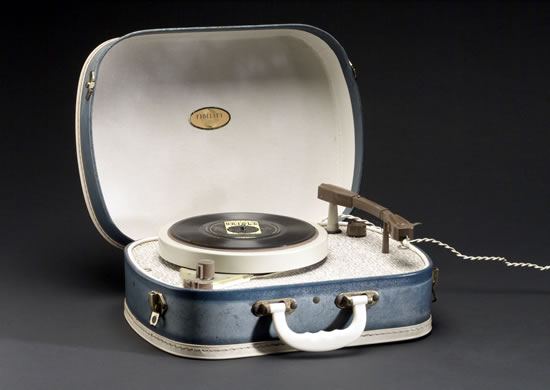
My first record player and
buying 45 records
1968
First 45 Bought 
Cloud 9 1968
The Temptations
It was Motown From Therein
Soul Seed: My 45 RPM Record Album from 1969 
Sears   Art  School Scholarship 
 1969 Watercolor By Luis Chaluisan
September 1971 
Melrose S. BX 10451
Honors Classes and Music Department
Graduate 26th out of 473 Seniors
 92.3% Grade Avg Over Four Years
1972 Read 
Down These Mean Streets 
Piri Thomas
Life Changing  
1972 WEST SIDE STORY
Premieres on NBC Network
Gangs Become Chic
At The Same Time
More Dangerous   

Finalist National Junior Olympic
Mile Race Summer 1973
2nd Place 
Van Cortlandt Stadium
4 min. 39 sec.
Varsity Half Mile Best 2:09.3
Varsity Mile Best 4:59.8
Championship Record Setting 
Hayes Varsity 
Cross Country Team 
1973
Coached by Mr. Ed Robinson
A RECORD 
THAT STILL STANDS 
With
1. Oscar Amaro '74
2. Richard Zwanzig '74
3. Butch Soares '74
4. Ricardo Morales '74
5. Luis Chaluisan '75
Avg Team Time 14 min. 12 sec.
Two and A Half Mile 
Cross Country Course 
Van Cortlandt Park  
September 1973
My Uncle Heriberto 
Takes Me To The Apollo
For A Sunday Afternoon 
Film And Show
And Live Performance 
1973

Watch SALSA TV Show
Hosted by Mr Salsa
Izzy Sanabria 
Fall 1973


 Hear Hector Lavoe
For First Time 1973

Sigue Feliz 
At FARIA Family Party
Nuestro Primos 
De Parte De  
La Familia Chaluisan


Hear Richard Pryor For First Time
Fan From That Moment Onwards.
 Establish 
"ADORACION" 
Dance Company 1974
 

 Isa Diaz-Tino Torres- Luis E Figueroa Jr-
 Al Brizuela-Roxanne Ortiz 1975 
My high school friends (15 in all split 8 women/7 men) and I formed the Adoracion Dance Company with my brother Ron and his friends in May 1974 presenting a combination cabaret show (comedy skits to open for 15 minutes/choreographed pieces to close for a half hour). We performed Salsa, Hustle, Swing and African dance numbers. And we had a small quintet of writers drawn from the Cardinal Hayes School Newspaper who created original material the group . These inluded . John Russell (future PHd Harvard/Gifu University Japan) and future NY Times reporter David Gonzalez. We used music recorded by Eddie Palmieri, Afro Caribbean Celia Cruz/Tito Puente/La Lupe LPs and Earth Wind and Fire's "Africano" as our closer. Adoracion (named after the Palmieri composition) appeared in parish auditoriums and Aspira sponsored open air events through 1976. The company ontinued when I left for College under the directorship of Luis Figueroa, Yvonne Armstrong and the late Isa Diaz. Our Latin Student organization at Amherst La Causa decided to present a cultural show case for November 1975. We had already formed an alliance with the Latina Stdent Organization at Mount Holyoke and they offered to help with dancers/poets and soloists. (The Mount Holyoke supporters were dubbed "Salsoul". We were disco heads in November 1975.)
  
Rose "Lupe" Santos
Senior Year HS
SBX Girlfriend 1974-75
Mother Butler HS

DRAMA CLASS SCHOLARSHIP
1974 
First two Salsa LP's I Buy
August 1974 
 Willie Colon Lo Mato
Eddie Palmieri Sentido
RECRUITED BY 
AMHERST COLLEGE
November 1974
Half Academic Scholarship
A Taste Of The Future
WEST SIDE STORY 1975
"Loco"  
Shark Gang Member
Hayes Production
Summer Tour And Two Week Run
At Lincoln Center 1975
I make a conscious decision 
the "gypsy's" life is for me
August 1975
 With Isa Diaz San Juan Bautista Festival 
Alliance Of Latin Artists
Central Park NYC June 1975
First appearance in NYC Media
Centerfold Photo
NY Daily News
 
Our Teen Pop Stars
1975 
One A Tragedy 
The Other A Survivor 
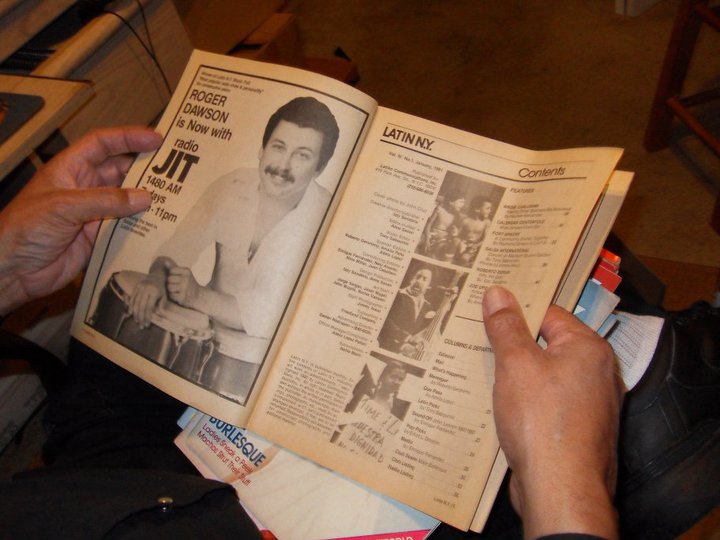
Roger Dawson
His Sunday Salsa Show
on 
WRVR FM Crossed Over
To Different Listeners
May 1975 
Enter Amherst College
August 29, 1975
Declare Theater Arts Major
Third Day on Campus
Live at 209 James Hall
 Launch of ESPIRITU SALSA
on  WAMH 1975 
 PALANTE! 1975  
We Bring Spirits to Amherst College 
Guest Appearance Alana Label
My First Poem
March 1976
Edited by 
John G. Russell Ph.D.
Gifu University


Move Into The Zoo
Amherst College
September 1976
"Drinking Again" November 1976
Experimental 
B&W 3:30 Music Video-Dance Film
Directed and Produced
by John Coles Amherst '79
Consultant On 
John Coles Film 
1977-78
 MAS PALANTE 1977 
The Palante Series Ran 
At Amherst College From 1975-2004 


Thank you Alana La Bel for providing yet another program from the PALANTE! Series we launched at Amherst College in 1975 (Pictured here is the April 1977 program. PALANTE ran at Amherst College from 1975-2004. )  In May of 1977 I joined Latin NY Magazine and was soon reporting and participating in the Salsa and Loisaida Arts scene including encounters with punk rockers and early hip hop artists MOVE TO MANHATTAN June 1977
31 Nagle Avenue
#6M in Fort George
In June 1977 This Apartment 
Went For $120.00 A Month
LAST LISTED AT $247,500 
As A Coop Apartment 2013


My Introduction to the  
RockerRollerRican 
Lifestyle 1977
I first go to CBGB's in July 1977 after making the rounds of the Latino Underground Arts scene concentrated between 3rd and 8th Street off Avenues A and B. And there on a Sunday Night I first see Television - whose rock I understand better than the Ramones. I meet the Long Island punk trailblazers at WAMH in Amherst College a year earlier when they play a chaotic concert at the school. In due time I witness Blondie, The Patti Smith Group, the Talking Heads, The Dead Boys, The Dictators and The Heartbreakers.  The only rule was the acts were to play only original music –- no covers, although The Ramones snuck them in occasionally (as did The Replacements). This had less to do with the club’s originality and much more to do with CBGB's fear of having to pay ASCAP royalties. I played there as Gang Bang Bang in 1984 backed by musicians from the Bronx Webster Avenue live Rock Scene that stretched from 238th street to Fordham Road. 


Two CBGB's performers impacted the frenetic style I would later employ as alter egos Little Otis and El Extreme.  Richard Hell of Television and David Byrne of Talking Heads. Byrne because of his singing (he doesn't have a huge range but knows how to bend and stretch his notes to add a unique style to the Talking Heads songs. 
David Byrne - Toni Basil
Richard Hell is just pure over the top performing (like Little Richard on Crack) but inherently apparent that he is in control of that character via his playing. It's no surprise that later in life he beccomes a successful author.


PUBLIC THEATER
EMERGING PLAYWRIGHT 
PROGRAM 1977

Interview Subject For
Elizabeth Swados


Elizabeth Swados  had a bit of a moment in the 1970s and early '80s. She's much less of a name now, and if you've heard of her at all, it may be because of her 1979 musical "Alice in Concert," which starred Meryl Streep and was adapted for a 1982 television broadcast. "Runaways" opened at the Public in the spring of 1978 before transferring to Broadway in May; it closed on December 31. Swados wrote the score and book, directed and choreographed -- and scored Tony nominations for them all. She also played guitar in the band. The ensemble cast included Josie de Guzman (who played Sarah Brown in the 1992 revival of "Guys and Dolls") and the underrated Trini Alvarado, who went on to star in the 1980 movie "Times Square." Last but not least, the biggest name in the original cast was Diane Lane, then 13. She was in the Public production but didn't make the Broadway transfer because she took a lead role in the movie "A Little Romance." Swados found her actors in various NY locations: playgrounds, high schools, community groups. Then they all collaborated on the book, with several company members getting songwriting credits. In "Free for All," the Public's oral history, Lane recalls that "we made the play from scratch, together, out of the kids sitting around telling their personal stories" -- though producer Craig Zadan, then working at the Public, also specifies that it was very clear there was one person in charge, and it was Swados.


WILD CHILD 1978  
The First Recording 
Arrangement: Luis Chaluisan
The beginning of the end. 
1978 WILD CHILD 
THE BLANKETS OF DOOM 
Williamsbridge Bronx 
My first original composition and recording 
from Fall of 1978
 produced on 4 track analog recorder 
Teac A-170S top loading stereo cassette.
Personnel:
Richard Salazar-Guitar BX NY
Peter Sarz-Bass BX NY
El Extreme Luis Chaluisan-Vocals/Piano/Conga BX NY
I ran my voice through a guitar flange 
to get effect 1978 
Ibanez Flanger FL-301-DX 
Check out " Wild Child 1978" 

WILD CHILD 
Disco Version 
Arrangement: Papo Vazquez 
Papo Vazquez Trombone
Willie Williams Sax
El Extreme Vocals
  
WILD CHILD 
Funk Rock
Arrangement: Luis Chaluisan 
La Gran Orquesta El Extreme
WILD CHILD
Gangster Rap Version
Arrangement: Brian Tully
Gang Bang Bang


WILD CHILD
Hard Rock Version
Arrangement: Luis Chaluisan
El Extremes Electric Cabaret 

Meet Mr Salsa 
For The First Time
January 1977 
At El Teatro El Porton
Latin NY Amateur Night
 
Felix Romero Isa Diaz 1977 
Read Lefty Barretto's  
Nobody's Hero 
Spring 1977
He was to become a Mentor and Friend
 Lefty on Left - Soledad on Right 
The Genius Producer Of Alegre
And Another Mentor
June 1977
CALLE LUNA CALLE SOL
"Loisaida" As I Witness It in 1977-79 


NEW RICAN VILLAGE 
101 Avenue A 1977


Young Lord Eddie Figueroa became a mentor in 1977 when I visited his Arts Center "The New Rican Vilage. Eddie Figueroa was typical of his Nuyorican generation in that he was a man of the street, a picaresque figure whose narrative combined the hustler’s pregón and the semi-intellectual air of the counterculture.  "The Arts is a way for us to express  our culture, our beliefs to a large audience. Our main philosophy is about personal growth. People developing their own potentilities. Their capacities learning who theyare, how this operates .. psychology. For example, we start working on a play by Pedro Pietri in a couple of weeks. Pedro is by far one of our more important writers. He's always been ahead of the curve. He's   very laid back and a lot of people can't understand what it is seeing things from their points of view but he's a visionary. His stuff is out there.  He shows relationships well, the ridiculousess and the tragedy of our relationships. Jesus is Leaving is an example of this but it wasn't executed well. The actors didn't put that across but the script did.  He has a play that just closed called The Living Room which is about mental illness and the piece that we're going to do What Goes Down Must Come Up which is about relationships. More things are hapening on radio than TV for us. The music on radio and a lot of the happenings that are ocurring now are being documeted on radio, not TV. I see cable TV as going to develop in the future for us. The focus moving into the eighties is more personal. If you want to call it politics it would be the politics of responsibilty. Are we going to be responsible  for the space that we occupy? Are we going to be responsible for educating ourselves in developing our own awareness and getting at the root of what it is?"   The New Rican Village is a music driven venue that features guerilla salsa by Conjunto Libre. While punk rock and new wave bands like The Talking Heads, Blondie and Kid Creole develop around them in the East Village, the Gonzalez brothers explore Afro Caribbean rhythms as reactionary head music with the New Rican house band. Andy and Jerry Gonzalez (Conjunto Libre) lead a pack of musicians who carve a special niche of their own in Latin music history. They perform each Thursday night. Flute player Nestor Torres, pianist Hilton Ruiz and saxophonist Mario Rivera (with his Salsa Refugees) stand out. Nestor is fresh from Puerto Rico. Nestor got here four years earlier with his family. A conservatory-trained musician who studies with Alberto Socarras (the first jazz flute solo on record is attributed to Socarras in 1928), Nestor Torres is a delight to meet and related to my father’s side of the family. His tone is pure. He plays the flute percussively dancing on top of the conga rhythms as a butterfly darts over a field of lilies. The genius of Nestor and bassist Andy Gonzalez is how they develop a musical language while they play. Each anticipates the others rhythmic patterns, notes, key changes while locked in a unique conversation of beats. When the music between Andy and Nestor is really happening there’s a deep communication that occurs where the two are one  in touch with their most inner selves. Their signature piece is a bass/flute duet entitled Tres Palabras -- Three Words. Their sound could be translated just as simply in three words: It was heavy. 
The Holy Grail At Latin NY


I meet him covering an appearance at Fordham College Lincoln Center. He splits a bill with ORQUESTA CIMARRON fronted by the tremendous Rafael De Jesus and develop a casual acquaintance. He is a very affable man. Obviously high but emanating a strange sort of spirituality. From the few conversations I have with him and encounters when I fall deep in the life with a West Indian Posse in my neighborhood during the mid eighties, I come to the conclusion what a bitch it is to be a professional Salsa Star. Not a life I ever want. At the same time my devotion remains intact to his career. Buy every album and learn to sing Salsa by memorizing ten of his songs. I am in Tucson when he passes away. It pretty much bums out the musicians I am playing with at the time. I'm not ashamed to say I cry for a 45 minutes straight the night of his death. The kind of cry where you can't catch your breath - sollosando. RIP Papito. Love you madly.

EL TODOPODEROSO
HECTOR APPEARS 
AT THE END 

HECTOR LAVOE REFLECTS ON HIS CAREER
Hector Lavoe reflexiona sobre su carrera

No Me Llores Mas
Salsa Hall Of Fame Single 
  
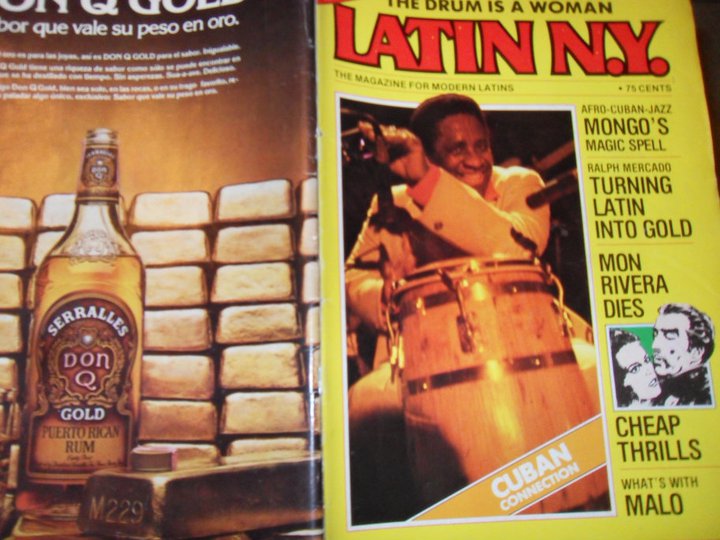
Issue I Was Hired
 Cover Story Report 
On Los Papines 1977
 
Meet Pedro Pietri 
And The Original 
Nuyorican Poet-Arts Scene 
At 503 East 6th Street 
While on Assignment
For LATIN NY
July 1977 
Is a frequent visitor to Latin NY
While He Is On Broadway
With Zoot Suit
 QUOTED IN FRENCH STUDY ON MONGO SANTAMARIA
Eléments bibliographiques : CHALUISAN, Luis. 1978. 
"Mongo's Magic spell".
Latin NY (April 1978) : 20-23, photos. 
La composition la plus célèbre de RS est certainement
Afro-Blue dont l'interprétation de John Coltrane domine le lot de
la vingtaine d'enregistrements qui en a été faite, même celui de
Count Basie et celui de Dizzy... mais c'est une question de goût.
D'autres compositions - moins connues sans doute - sont intéressantes
Yambú, Mi guaguancó. Quand on compile les enregistrements, on constate
que RS a enregistré seulement deux standards cubains (El Manisero -
Manteca), tandis qu'il a gravé plusieurs tubes de jazz (All the things
you are - Body & Soul - Summertime - You are on my mind).


Invited To Salsa Dance 
with Brooklyn Philharmonic  
By David Amram Premiere Of 
Summer 1977

A Kindness I Gratefully Returned In 2004
Inviting David To Tour 
With SPIC CHIC
In Europe 
David Amram's `Upbeat' Memoir 
A Riff On A Full Life 
Upbeat: Nine Lives of a Musical Cat 
 (Paradigm; 322 pages; $23.95) 
is filled with an almost manic glee, 
a hunger for experience, knowledge 
and kinship that is positively infectious. 
Former Albany Poet/musician 
Luis Chaluisan 
makes an appearance 
in a chapter titled 
"Natural Ambassadors," 
which focuses on Amram's efforts 
in the Latin musical community. 
MICHAEL ECK Albany Times Union


My Editorial Mentors While At Latin NY
Far Left: Soledad Santiago Middle: Piri Thomas 
Next to Piri: Lefty Barretto 1977 

  Felix Romero - Isa Diaz
Performing with Felix Romero's  
Teatro Puerto Rico
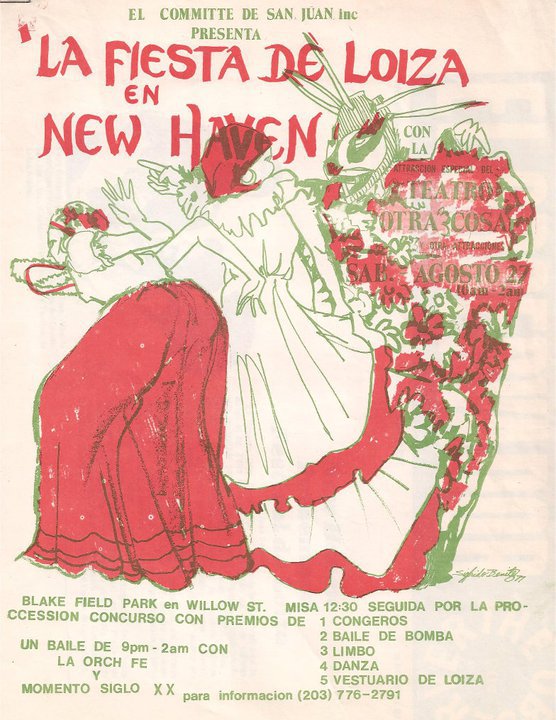
 Teatro Otra Cosa Drummers: Performing at 
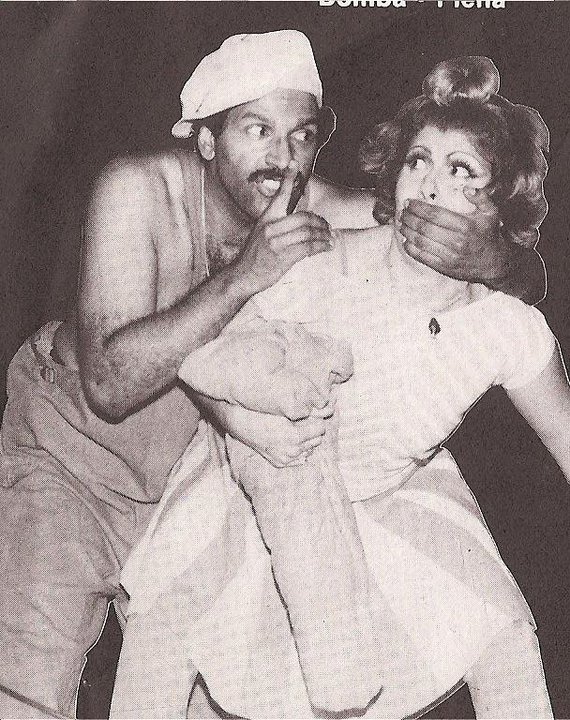
Lincoln Center Plaza in New York City 1977. 
Teatro Otra Cosa was founded by Felix Romero 
my mentor in Bomba Dancing. 
This was my Creative FAMILY 
and remain my daily inspiration to create.
(Much love l-r Ayoka, Jose Manzo, 
Joe Sircus, Felix Romero and James Cherry)

Favorite Bronx 
Neighborhood Salsa Club

On Tour With Fania All Stars 
1978 FOR LATIN NY
In Puerto Rico with  Ruben Blades and Papo Lucca
Relaxing Before Show At Coleseo Roberto Clemente 

"CUPCAKES"
Miguel Pinero's 

Solo Singing 
Performance 
 Christmas Show 
With Teatro Otra Cosa

Marijuana Enters My Lungs As 
Plays In The Background
March 17, 1979
Sunday Night 5:30 PM
Smith College  

WFSB Channel 3 REPORTER
Hartford. Connecticut 1979
Chasan Is Born
1981
And The Universe Changed
 

Aetna Corporate Communications
Associate Producer 
TV Pilot Program 1981
Executive Producer
ARTBEAT 1982 
WBGU TV 
Putting into Action as a Professional Television Producer what I witnessed and participated in as a writer during my tenure at "LATIN NY" Magazine and the Loisada Arts Scene 1977-1981


ESPIRITU SALSA 
WBGU FM 1982-84
The First Band As 


December 1982 
First of 27 LSD Trips
1982-1991
Toledo Rock And Rollers
Who Have A Great Impact
On My Musical-Creative 
Direction
The Haircuts with Steven J. Athanas having 
a good ol' time at the Toledo Festival 1982. 
Loved By Millions   

The Wet Shavers 1982 

circa 1982
"The Haircuts" balanced the Indie NW Ohio Rock Scene that existed in the early 80's by bringing a distinctive style in their appearance and a razor edged rockabilly sound that neatly complimented the more R&B-Motown New Wave Pop Tunes that The Wet Shavers perform.
JUMP AND JIVE BAND 1982-84
Aaron Purdie
JUMP AND JIVE BAND 1982-84
I loved playing with the Jump and Jive band
Not only because they were the only swinging
African American Group In NW Ohio
But also because they were true friends. 
 
Ray Salazar's BLUES CONFIDENTIAL is the first band 
to hire me as a percussionist in 1982. I learned to to sing gutbucket 
blues with the group and play hardcore four sets a night. Plus drink 
like there was no tomorrow. So much so that Ray fired me for taking 
a conga solo in the middle of a slow ballad while playing a gig at 
SPATZ bar in South Toledo (lol). Miss you a lot bro.


Hip Hop Swing 1982 
First Aired WBGU TV 
on Art Beat 
Later Aired in 1983 on MTV "Basement Tapes"
Hosted by: Martha Quinn and
Billy Crystal as Commercial Break Lead in. 
About Basement Tapes:  
MTV would show indie band videos and  
viewers voted for the band they 
thought  deserved a recording 
contract  by calling an 800 number
.
NORO'S CLASH 1982 
First Aired WBGU TV 
on Art Beat   

ADIOS LATIN NY Y LA LUPE

My final article in Latin NY appeared in 1984. One of the major stories that year is La Lupe's Dire Straits. Known for her energetic, sometimes controversial performances, she is considered by many to be one of the leading singers in the salsa music genre. She injured her spine in 1984 while trying to hang a curtain in her home; she initially used a wheelchair, then later a cane. An electrical fire made her homeless. This film is of her last performance as a Santera Salsera at a 1984 Benefit held in her honor following the accident. After being healed at an evangelical Christian Crusade, La Lupe abandoned her Santería roots and became a born-again Christian.


 (Crack Posse Memories) 1985-1989
from "RENAISSANCE RICAN" © 2012
It was with a great sense of trepidation that I returned to the Bronx 
in the spring of 1985. Not because of the neighborhood. I always 
felt safe there. But that fall I was to return to Amherst College for 
my senior year and the place never held any sense of love for me. 
Talk about being a fish out of water. 
It was Spring
and
I was Blind
 Christine R Cain
My Best Friend At Amherst College
Senior Year-One Of The Reasons I Succeed
Later Graduates  Columbia University
 School of Arts and Sciences PhD
Molecular Biology · New York, New York

Local News Writer 1986
Broadway Criterion 1986
Featured Mambo Dancer 
with My Brother Ron
Maureen Davis Presentation
Head Staff News Writer 1987
Time Warner ACQ
1988 Marketing

 1990 State Senate 
Minority Communications

La Gran Orquesta 1990
Promotion-Promotion-Promotion. I landed a booking at the Albany Music Expo in 1991 without having an actual band by using a tape from my Litle Otis and The  group. I had a month to get ready but I knew a bass player (Mike Persico) and he knew a trio that had just broken off from another band in the area.  Ray "Stingray" Sabater then walked into my life (he was 16 at the time but sneaking into house party dances at the local clubs.) I started talking to him because he was obviously Puerto Rican and when I found out he was a Sabater, I told him him "you're in the band!" We just had to do eight songs at the Music Expo. The easiest solution? We picked out themes (reggae, Blues, Funk, rockabilly, ska and a spoken word piece) set up the chord changes and different keys for each song then jammed ahead into the night. It was a combination of nervousness and sheer panache but we pulled it off and landed a recording deal with Blue Lunch Records that first night plus a great writeup in the local paper.  I convinced a producer from a channel in Albany that we were were from NY and we could do his show in three months.  We needed a promotional tape and the result is what you see here.  My mom always says I can sell coal in hell and I've had a great time shoveling it all just to have a good time!
Iron "Mike" Tyson 
has a swinging club in Albany in 1990. 
I slip him a cassette of  "Joke 'Em" to see
If  we can play there but it's just a disco.
At least he laughs at the title of the LP. 
A month later he loses the Title 02-11-90
Maybe he should have stayed out of the club more

WCDB FM Live Radio Broadcast
GINA WANTS TO TALK SPANISH
La Gran Orquesta El Extreme 1991
From our First LP 
"Joke Em If They Won't Take A Funk" 
Blue Lunch Records(c) 1990
La Gran Orquesta El Extreme 1991 WCDB FM
Live Radio Broadcast 
GINA WANTS TO TALK SPANISH
We did it all: Radio-TV-Touring-Albums
Drugs-Sex-And Rock and Roll
The Very Best Of La Gran Orquesta El Extreme
24 BIG ONES!
Featuring:
Ray 'Stingray' Sabater: Percussion
Brian Tully: Bass
Steve  Gifford: Drums
John Caplis: Guitar
Will  Zwink: Alto Sax
Mark Giammetei: Guitar
El Extreme: Vocals To order CD e mail 

quantumvision2@yahoo.com 347-526-2670


Telemundo Channel 40
1992 Tucson, Arizona
Espiritu Salsa KIIM FM
(KHOT) 1992 
Tucson Arizona 
Salsa Musician In Arizona 1992
Playing Timbales And Vocalist With
About Bubba
I am a Professional Musician 30+ years living in many different areas of the country. I also mentor young musicians and youth involved in drugs and gangs. I am an amputee, due to a Brown Recluse spider bite. I live life to the fullest of my abilities. My motto is siempre pa'lante nunca pa'tras, (always forward, never backwards)


AND
About Rene 


Rene Camacho is an Acoustic and Electric Bassist living in Los Angeles. Originally from Tucson, Arizona, Rene received a Degree in Jazz Studies and Composition from The University Of Arizona. While Trombone was his first instrument he always had an affinity for the Bass and in his college years the switch was made. Since moving to Los Angeles in 1996 Rene has had the opportunity to explore many musical ventures, both live and recording. When Rene first arrived to Los Angeles he began working with many Latin artists, most notably, a five year stint with Celia Cruz. There were also brief appearances with artists such as Tito Puente and Poncho Sanchez. From there Rene began branching out to different genres such as Jazz, Soul, R&B, Country, as well as Rock. This has enabled him to record and tour with a wide variety of artists from different musical backgrounds. Such artists include Sergio Mendes, Ry Cooder, Kevin Eubanks, Oscar Castro Neves, Angelique Kidjo, Linda Ronstadt, Carol Welsman, Raul Malo (The Maveri ks), Rickie Lee Jones, Juan Gabriel, The Fifth Dimension, The Pointer Sister, Dean Brown, Susie Hansen, and Rebeca Mauleon. Rene continues to actively tour with Draco Rosa, Kevin Eubanks, Robben Ford, Canadian Pianist Carol Welsman and record with artists from all over the musical world.

(Formerly KCJT )
Yakima Washington
Director Of Development 1993
Official Municipal Doc: Page 6  
"Consideration of Ordinance Authorizing Extension 
Of Cable Television Franchise. Luis Chaluisan is the
Director of Development for KCJT, Channel 17, 
713 West Yakima Avenue, a locally owned 
Spanish television station." 


 WGY 1997 Albany NY 
Marketing
 National Slam Poetry Champion
State Team Champion 1998/1999
Connecticut (5th/7th Place)
in AustinTexas and Chicago 
1998 National Poetry Slam Results
Friday, August 21st, 1998
 
5th Place Nationally
out of 200 teams:
Ct. State Team
Members:  
Nov 1999 
Seen performing Johnny Boy 
Chicago Tenth Anniversay 
National Slam Championships
Chicago Theater 
7th Place Nationally
out of 200 teams:
Ct. State Team
Members:  
Former Website Sold 
To Insurance Entrepreneur
Programming Rebroadasted
Rebranded 
New Edge Cabaret 
In 2005 
Release 
Jan. 2001
SHOWTIME!

SPIC CHIC 
1974 Latin NY Article
By Mr Salsa Izzy Sanabria
That Inspires The Play
 
 SPIC CHIC (The Play)  
Debut September 18th 2001
La Artista - Maria Hernandez 

 SPIC CHIC Nuyorican Poets Cafe  

 
 With NYC 
Congratulations on 
Success Of Spic Chic


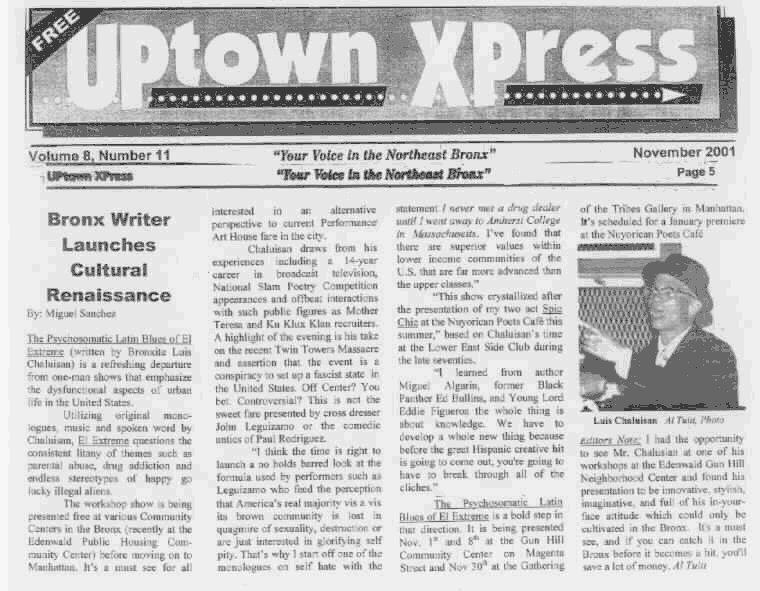
And they are often found not only reading but also acting and singing in their own shows and performance pieces. ''Spic Chic,'' a one-man show opening at the Nuyorican Poets Cafe this month, features poetry, music, drama and monologues to portray Puerto Rican pride in surviving life in the United States. Luis Chaluisan, 44, the show's creator, calls it ''the further adventures of an unrepentant Rican with no self-pity.'' ''You know what a Nuyorican is?'' Mr. Chaluisan asked. ''It's someone who finds solutions. How do I surmount this?''


Chronologcal Development 
Of Spic Chic
From Edenwald Projects Community 
Room To European Tour
2001-2004

SPIC CHIC 
First Workshop Performance
Edenwald Housing Projects 
Community Room
September 18, 2001  
SPIC CHIC
Workshop Performance 
Nuyorican Poets Cafe 
November 2001
At Nuyorican Poets Cafe Hi Definition BLIP TV
Compressed Version Below
SPIC CHIC Off Broadway 
Chelsea Playhouse 2002 
DIRECTED BY:   
Actor, Director, Playwright, Teacher
Founder and CEO of I The Actor.
On The Way to Timbuktu

SPIC CHIC Off Broadway 
Repertorio Espanol 2003 
Luis Chaluisán (Performer/Author, Spic Chic) was born in The Bronx in 1957. After traveling all through the United States he returned to his hometown in 1999 where he currently resides. He graduated from Amherst College, the Loisaida arts scene in 1977. He has worked as writer/editor for The Latin New York magazine, was a reporter/writer for local CBS News stations in Hartford, Connecticut and New York, Bar Band Rock and Roll Bands in the Midwest and Public Television producer in Ohio. He was married, divorced, took a turn with Salsa Bands in the Southwest, morning news writer for a Ted Baxter like anchor, writer for The State Senate in Albany and recording for Blue Lunch Records in upstate New York. He spent those obligatory times in jail for fighting, run guns into Mexico during the early stages of the Chiappas uprising with some crazy Marialito Cubans, collected for a neighborhood bookie, lost his friends to AIDS, witnessed the birth of his daughter (who turns out to himself in high heels). He ran a Telemndo TV Station out west for a goofy white American businessman, married a one legged former call girl whose a dead shot, hosted a couple of FM radio shows, landed in a top ten team twice at the National Slam Poetry Competitions 1998/1999 and finally returned to New York as El Extreme - that Nuyorican poet celebrating his tribe at the local slams. The only thing that saves him in times of trouble or confusion is that he always has a pen and the Holy Trinity -- Family, The Bronx and Ricans -- no matter how strange the situation is.


COCK TALES

 Original hand made version by Pedro 
of his En Mi Viejo San Juan. 
My payment for being in 
COCK TALES (2003)

SPIC CHIC 
Despierta America 
Univision NY 2004


 Metroland Art Mumur The Return of El Extreme 
 

According to Phil Williams, Chaluisan is a highly energetic character with a real passion for what he does. And his ability to share that energy and create a buzz is just what Changing Spaces needs. “If there’s no enthusiasm, it really affects our ability to stay open. Luis has really given us a shot in the arm,” says Williams. Chaluisan is no stranger to the Capital Region. The Bronx-raised Puerto Rican artist used to live here in the early 1990s, and you might say that his hit one-man play was born in Albany. His band, La Gran Orquesta El Extreme, debuted at Pauly’s Hotel in 1990 and the compositions they performed that night form the basis of Spic Chic.


On Tour In Germany 
Bonn Opera House 2004
I Am A Cultural Terrorista Interview mit dem Theatermacher Luis Chaluisan,
der Schauspielerin María Hernández
und dem Komponisten David Amram


Vom 12. bis 20. Juni 2004 fand in Bonn wieder die Biennale für zeitgenössisches Theater statt. In diesem Jahr war das Programm der Theatermetropole New York gewidmet. Als Beitrag der lateinamerikanischen Szene der Stadt präsentierte die Biennale auf der Werkstattbühne des Bonner Opernhauses Spic Chic: Lola Magdalena von Luis Chaluisan. Der New Yorker Theatermacher puertoricanischer Abstammung inszenierte in der aus drei seiner aktuellen Stücke arrangierten Collage einen Parforceritt durch das Leben eines Latinos in der Ostküstenmetropole. Wie im klassischen Schelmenroman schildert der reuelose Puertoricaner ohne Selbstmitleid aus der Perspektive von links unten skurrile Begegnungen sowohl innerhalb der eigenen Community als auch mit dem weißen angelsächsischen Establishment. Ob als Heranwachsender im Konflikt mit dem traditionalistisch angepassten Elternhaus, als Greenhorn unter den literarischen Größen im Nuyorican Poets Café, als Student an einer konservativen Uni, als Nachwuchsreporter fürs Fernsehen oder als Kunde bei einem missionarischen Friseur – überall bringt er mit seinen Fragen und seiner Art alles durcheinander, weil er so gar nicht in die jeweiligen Denk- und Handlungsstrukturen passt. Chaluisans Theater – den größten Teil des Abends stand er alleine auf der Bühne – ist ein Feuerwerk unvorhersehbarer Pointen. Mit einer grandiosen Mimik und Stimmenvielfalt schlüpft er in die unterschiedlichsten Rollen und präsentiert die witzigsten und aberwitzigsten Dialoge. Vom Englischen wechselt er immer wieder zum Spanischen oder zum originär Nuyorican Spanglish. Dieses Spanglish ist, so klärt er die ZuschauerInnen im Nebensatz auf, keine Sprache, denn eine Sprache – so seine wunderbare Definition – is a dialect with an army und a navy. Luis Chaluisan spielt, singt, tanzt, macht Musik und müsste eigentlich nach zwei Stunden fix und fertig sein. Doch das Multitalent meinte, ein Interview sei kein Problem. Direkt nach der Spätvorstellung – noch in Kostüm und Maske – holte er uns in die Garderobe und wartete ungeduldig auf das Einschalten des Aufnahmegeräts. Mit von der Partie waren zwei weitere New Yorker Multitalente: Die dominikanischstämmige Schauspielerin und klassische Geigerin María Hernández, die in einer Szene und einem eingespielten Video im Mittelpunkt stand, und David Amram, einer der ganz Großen der US-amerikanischen Musikszene, ein begnadeter Jazzmusiker und gleichzeitig ein wichtiger klassischer Komponist und international tätiger Dirigent. Er komponierte und spielte die Musik zu Spic Chic: Lola Magdalena. 


SPIC CHIC 
German Radio Interview 2004
Maria Hernandez 
BEAUTIFUL from Spic Chic 
Bonn Opera House 2004
SPIC CHIC 
Telecinco 5 (Madrid Spain) 2004
 La Mexicaine de la Perforation (LMDP)
Paris, France 2004
 
CHAMACO EL GANGSTER
 Performance At The Nuyorican Cafe 2004    
CHAMACO EL GANGSTER
Studio Version Filmed  
At Time Warner MNN

Oil Painting by  
EL Extreme 2004

Release  Experimental Work 
May 2005

FROM MAMBO TO HIP HOP 
2005 Excerpts
Full Documentary

El Extremes Electric Cabaret
El Extremes Electric Cabaret NYC 
Farewell Performance Easter 2005  


Easter Sunday~What better day than to close a a 25 year playing out live and to do it in a Rock and Roll Chapel? We had played balls to the wall ALL THE WAY! The Adventure didn't stop though. There were new stories to tell and write down. A creative resurrection. El Extremes Electric Cabaret final full performance at original Knitting Factory NYC 2005 The Knitting Factory was founded in 1987 and over the years has grown into Knitting Factory Entertainment (KFE). Though primarily known for their venues—both clubs and concert houses located in Brooklyn, Boise, Spokane and Reno—KFE. Also promotes national tours, produces the hit Broadway musical Fela!, operates The Federal Bar Gastro Pub in North Hollywood and is a partner with record labels Partisan and Knitting Factory Records. Another venture, High Adventure Management handles the careers of emerging and critically acclaimed recording artists both in the U.S. and overseas. It is the West Coast artist management wing of KFE.  

Elextreme.info
Ceases Operations  
2000-05
Programming Rebroadcasted
and Rebranded as
New Edge Cabaret 
In 2005 
November 2005 
Launch 24/7 
Community Television
Broadcasting 
via Internet 
TV News, Local Events 
and Special Programs 
Focusing on 
10467-10469 Neighborhood


Move To Mayaguez Puerto Rico 
August 2007 

Plaza De Colon Poetry Series
Mayaguez Puerto Rico
September 2007 
Jesus "Chu" Matos 
Dr. Linda Rodriguez Ph.D. 
El Extreme

University Of Puerto Rico Student Poets
Recinto Mayaguez 
Plaza De Colon

Cervantes Award at the 
First International Congress of Virtual Writers 
sponsored by the University of Puerto Rico 
Nov 2007
Interview About First International Congress 
of Virtual Writers, From Mambo To Hip Hop, 
Spic Chic, Salsa and The Nuyorican Experience.
Nov 2007
Plaza del Mercado de Ponce  
Poetry Series
Ponce Puerto Rico
December 2007
Featured Performer 
Arts And Culture Night 
March 2008
Esta antigua residencia contruída en 1890, imbatible ante los desastres naturales, permanece aún intacta como símbolo de la arquitectura típica del Mayagüez tradicional. Hoy museo, la casa, cuya fachada frontal queda hacia la calle Méndez Vigo, fue lugar de cultivo del arte y la cultura. Diseñadaen estilo neoclásico criollo, su majestuosa fachada se caracteriza por sus pilastras, cornisas y por sus arcos de medio punto. La residencia tiene acceso tanto a la Avenida Méndez Vigo como a la Mckinley. Uno de los acceso a la residencia es a través de la escalera lateral con zaguán que lleva al patio interior con galería. Su distribución interior es amplia y espaciosa. Cabe señalar que albergó la Sede de la Audiencia de Mayagüez, donde se reunían personas ilustres de la talla de José de Diego, quien en el 1899 presidió esta prestigiosa entidad judicial. Horario: lunes - viernes 8:00am - 4:30pm Calle Méndez Vigo 104 Este Mayagüez, P.R. 00680 Tel. (787) 832-7435
  
March 2008 
Lunch at El Quiote Restaurant in the Chelsea neighborhood. 
Left to Right Linda Rodriguez-Guglielmoni, Luis Chaluisan, 
Ishmael Reed, Tony Spiller and Miguel Algarin.
In late 2008,  Steve Cannon's Fly by Night Press 
(a subsidiary of A Gathering of the Tribes, NYC) 
opted to publish a compendium of poetry, photos, 
artwork, comedic essays and short stories dating 
back to 1975 under the title of Spic Chic 
(The Adventures of the Last Nuyorican), 
written by Luis Chaluisan (aka El Extreme).
Spic Chic Book Signing
August 2009

 Spic Chic Interview Excerpt August 10, 2009
The Value of Anger. I talk candidly about the 
edgy aspect of my Nuyorican writers experience 
including having to retrieve his door receipts at the 
Nuyorican Café at gunpoint, being hounded by the 
FBI and NY Antiterrorist Squad and the seeds of 
the Lola Magdalena story. Excerpt from Interview 
by Sissy Gameche on Channel 57 Time Warner


Return To Live In  Toledo Ohio
February 2010


El Regreso